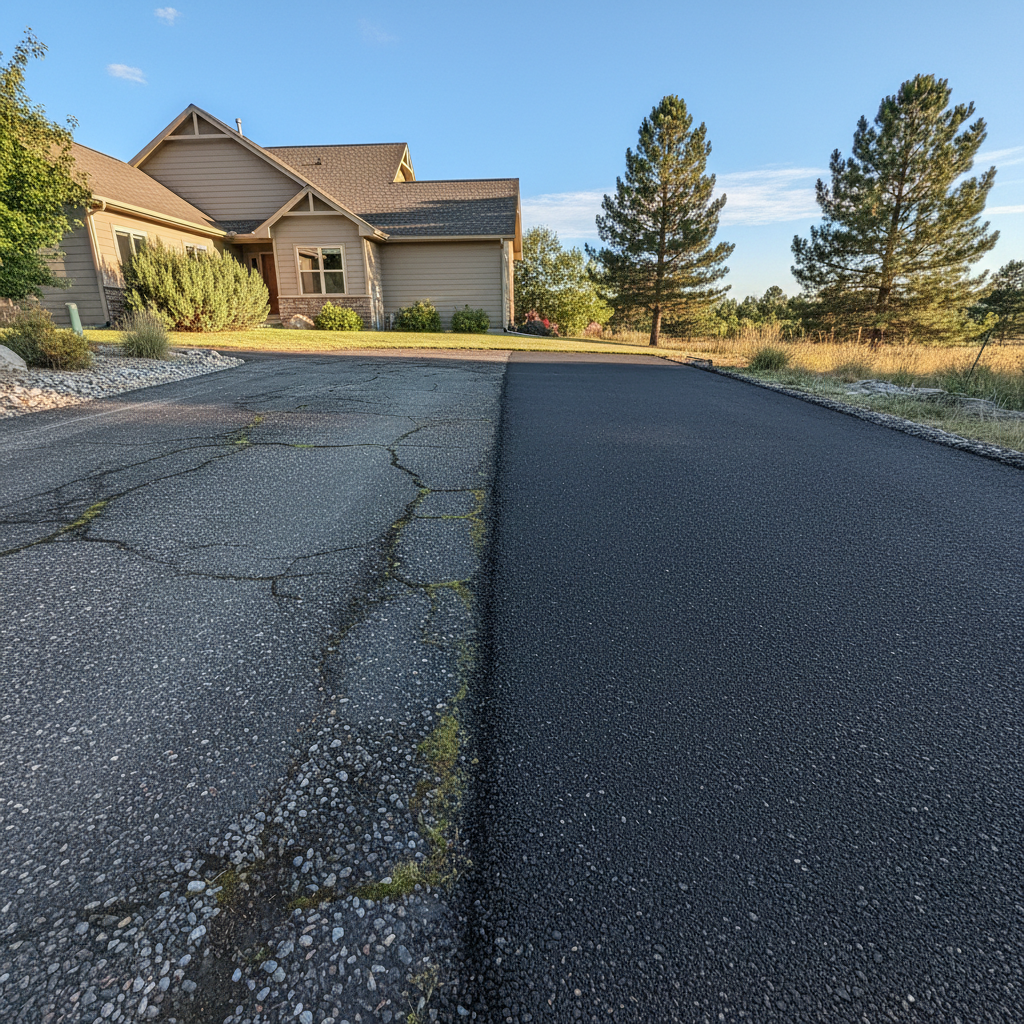
Alright, let's talk asphalt milling. Maybe you've got an old driveway that's seen better days – cracks, potholes, or it's just plain lumpy. You probably know milling is a smart first step before repaving, but have you thought about what *kind* of milling? Most folks don't realize there are a couple of ways to tackle this, and picking the right one for your Billings property can really save you headaches and cash down the road.
Here at Diamond Asphalt, we see all sorts of driveways. They range from the historic ones in the South Side neighborhoods to the newer builds out west. The ground here in Montana, especially with our wild freeze-thaw cycles, really puts asphalt to the test, doesn't it? So, let's break down the two main milling approaches: full-depth milling and surface grinding.
Full-Depth Milling: The Whole Nine Yards
When we talk about full-depth milling, we're basically stripping away the entire existing asphalt layer. We go right down to the gravel base. Think of it like hitting the reset button on your driveway.
Cost
This is usually the more expensive option upfront, no two ways about it. You're removing a lot more material, which means more machine time, more fuel, and more hauling away of that old asphalt. Plus, we might need to do some base layer work if we uncover issues once the old asphalt is gone. It's a bigger project, so the cost reflects that.
Durability
This is where full-depth really shines. By taking everything out, we can inspect and repair the underlying gravel base. If that base is solid and properly graded, your new asphalt layer will sit on a much more stable foundation. This means a significantly longer-lasting driveway, better resistance to frost heaves – and we certainly see plenty of those around here – and fewer structural cracks popping up too soon. You're building from the ground up, essentially.
Maintenance
With a strong, new foundation, your maintenance costs over the life of the driveway should be lower. You'll still need to sealcoat every few years and fix any minor cracks, sure, but you're less likely to deal with major failures like widespread potholes or significant settling that come from a compromised base.
Appearance
A full-depth mill followed by new asphalt gives you a perfectly smooth, consistent surface. It looks brand new because, well, it pretty much is. You won't see any ghosting of old cracks or unevenness showing through the new layer since the old layer is completely gone.
Surface Grinding: A Top-Layer Refresh
Surface grinding, sometimes called 'shaving' or 'skin milling,' is exactly what it sounds like. We're only taking off the top inch or two of the existing asphalt. It's more of a superficial treatment.
Cost
Generally, surface grinding costs less than full-depth milling. You're removing less material, so it's quicker, needs less heavy equipment time, and less disposal. If your budget is tight, this can look pretty attractive.
Durability
Here's the catch with surface grinding: it only fixes surface problems. If underlying issues – like a weak or unstable gravel base – are causing your cracks and potholes, then just grinding off the top isn't going to solve them. You're basically putting a new band-aid on an old wound. The new asphalt layer will look good for a while, but those underlying problems are likely to reappear, often within a few years. It's just not built to last as long as a full-depth job, especially with our fluctuating Montana temperatures.
Maintenance
You might find yourself doing more frequent repairs down the line. If the base isn't sound, you'll be patching cracks and potholes sooner than you would with a full-depth job. Your long-term maintenance costs could actually end up higher because you're constantly dealing with recurring issues.
Appearance
Initially, it'll look good. The new top layer will be smooth and black. However, over time, if there were structural problems underneath, you might start seeing reflective cracking – that's when the old crack patterns eventually show through the new asphalt. It won't have that same long-term pristine look as a full-depth replacement.
My Recommendation for Billings Homeowners
Look, I'm not going to beat around the bush. For most homeowners in Billings, especially with our challenging climate and often clay-heavy soils, I almost always recommend full-depth milling. Yes, it's more of an investment upfront, but it pays dividends in durability and longevity. You're not just patching a problem; you're fixing it right, from the ground up.
Think about it: you want a driveway that can handle our hot summers, our brutal winters, and those crazy spring thaws without falling apart in a few years. A strong, stable base is the secret to that. If your existing asphalt shows significant structural damage – widespread alligator cracking, deep potholes, or areas that are clearly sinking – then surface grinding is just a temporary fix. You'll end up spending more money in the long run trying to keep it together.
Now, there are rare cases where surface grinding might be acceptable. Maybe your driveway is relatively new, but you've got some minor surface deterioration from poor drainage, and the base is absolutely pristine. But honestly, those situations are few and far between, especially with older driveways. Most of the time, if you're going through the trouble and expense of milling and repaving, you want to do it once and do it right.
Give us a call at Diamond Asphalt. We can come out, take a look at your specific situation, and give you an honest assessment. We'll tell you what we think is the best approach for your property, not just the cheapest or the easiest.