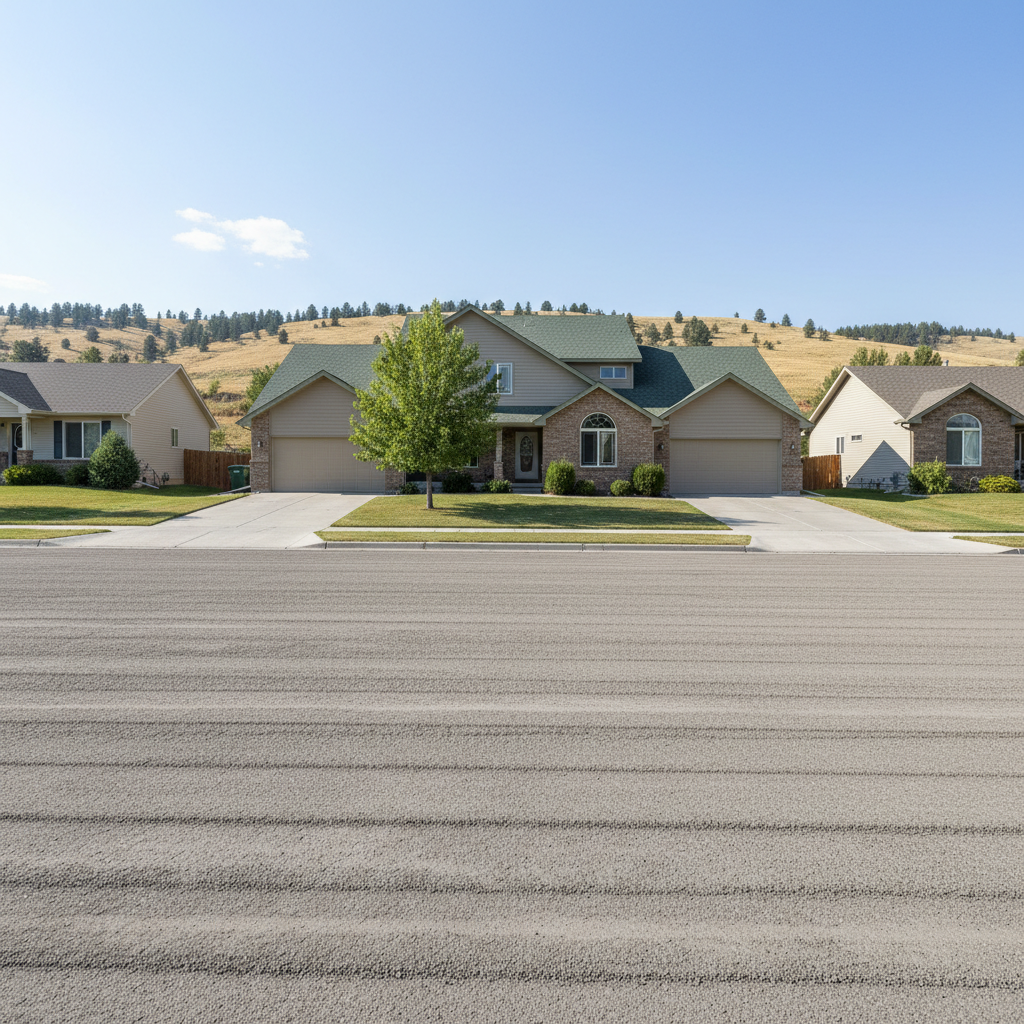
I'm sure you've seen them around Billings. Those big machines that look like they're munching on old asphalt, leaving a rough, grooved surface behind. That's asphalt milling, and for us at Diamond Asphalt, it's a really important step in many of our projects. It’s not just about tearing things up, you know? It's about getting everything ready for pavement that lasts longer and performs better.
So, What Exactly Is Asphalt Milling?
Simply put, milling is when we remove a specific depth of existing asphalt pavement. We use a special machine for it. Think of it like a giant planer, but for your driveway or parking lot. Instead of digging up the whole thing and hauling away tons of old material, we just shave off the top layer. This leaves a textured surface, which is perfect for a new layer of asphalt to stick to.
Why do we do it? Well, there are a few big reasons. First, it lets us control the pavement's grade and slope. If your parking lot in the Heights has developed some dips and puddles over the years, milling lets us take down the high spots. Then, we can build up the low spots with the new asphalt, which gives you much better drainage. Nobody wants standing water freezing and thawing in their lot all winter, do they?
Second, it helps us keep the underlying structure intact. If the base layers are still solid – and they often are, especially on roads that were built properly – there’s no need to rip everything out. Milling just deals with the worn-out surface. This saves you money, saves time, and it's better for the environment because we're not sending as much material to the landfill. Oh, and those milled materials? We often recycle them right back into new asphalt mixes. It's a pretty neat, closed-loop system.
When Does Milling Make Sense for Billings Projects?
We see milling used all over Billings, from residential streets in the West End to commercial parking lots downtown. It's especially useful for a few common situations:
- Resurfacing without raising the grade: If you just pave over an existing surface again and again, you'll eventually make the pavement level too high. This can cause problems with drainage, curbs, sidewalks, and even building entrances. Milling removes that old layer, keeping your finished grade exactly where it needs to be.
- Fixing serious damage: Sometimes a pavement isn't completely shot, but it has significant cracking, rutting, or potholes that are too deep for a simple patch. Milling out that damaged section and replacing it with fresh asphalt makes for a much more durable repair.
- Creating a uniform surface: Maybe you've had a bunch of utility cuts or patches over the years, and now your pavement looks like a patchwork quilt of different textures and elevations. Milling creates a consistent, smooth surface for the new overlay.
- Preparing for overlays: For many larger projects, a new asphalt overlay needs a solid, clean, and consistent surface to bond to. Milling provides that ideal base, making sure the new pavement lasts longer and performs better.
Think about some of those older commercial lots around Shiloh Crossing. They've seen a lot of traffic and a lot of Montana weather. Instead of a full tear-out, milling often gives them a new lease on life, making them look sharp and function well without costing an arm and a leg.
Why Local Expertise Matters for Milling
You might think milling is just milling, but there's a lot that goes into doing it right, especially here in Billings. Our freeze-thaw cycles are brutal, and the soil conditions can vary wildly, even within a few blocks. Some areas have that heavy clay that holds water, while others are more gravelly.
A good contractor knows how deep to mill, what to look for in the underlying base, and how to manage the milled material. We aren't just operating a machine; we're checking the existing conditions and planning for the best possible outcome for your new pavement.
For example, if we're milling a residential street in a neighborhood like Alkali Creek, we're thinking about how the new surface will connect to existing driveways and sidewalks. We're also considering the specific asphalt mix that will stand up best to our local climate once the milling is done and it's time to pave.
It's all about precision. Mill too shallow, and you don't fix the real problems. Mill too deep, and you might hurt the base or waste material. Knowing the local conditions, the typical construction methods used in different parts of Billings, and having the right equipment for the job really makes all the difference.
So, when you see those milling machines at work, know that it's often the first step in giving a road or parking lot a strong, fresh start. It's a smart, efficient way to get a quality new surface that'll hold up to everything our Billings weather throws at it.