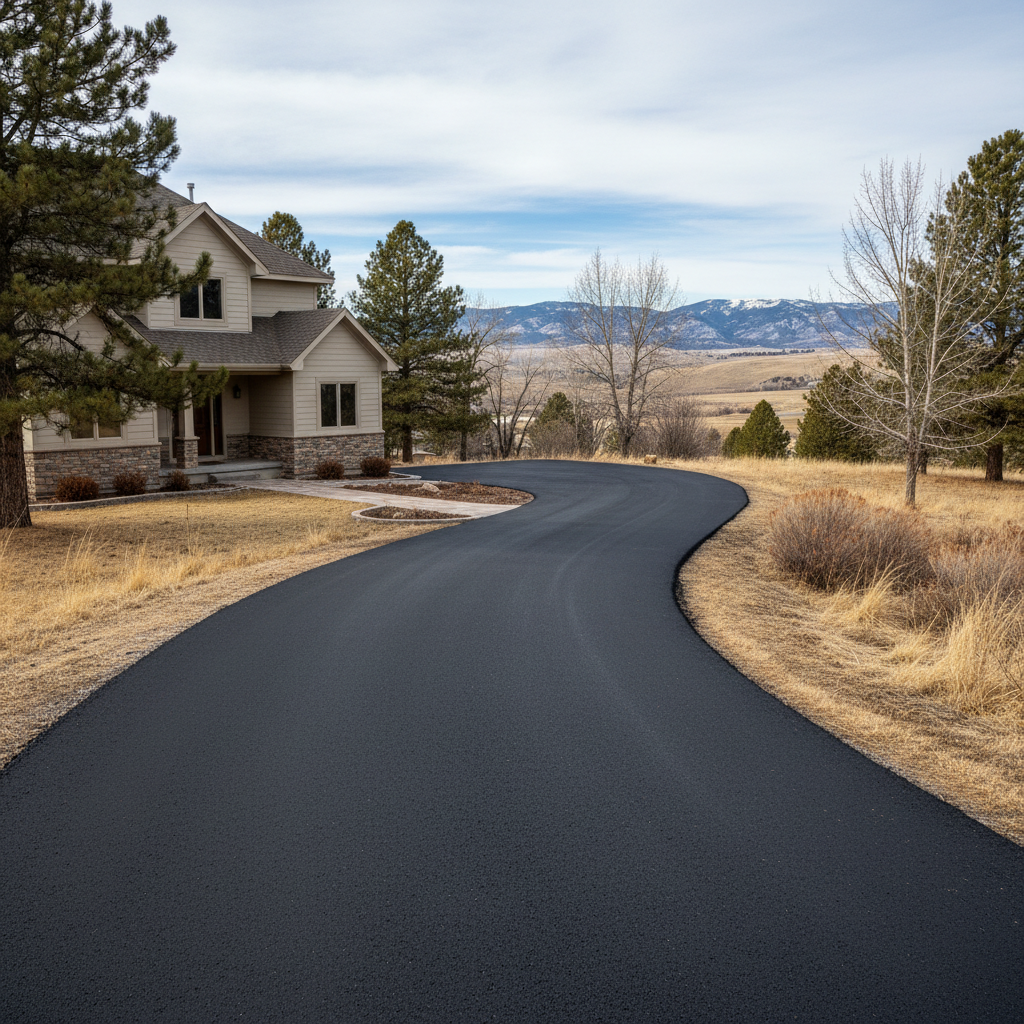
Water freezing in a crack on your driveway is a familiar sight for property owners wondering how long a patch will hold. Property owners living up on the West End or down around the Heights already know what Billings weather does to Asphalt. Between the heavy winter snowplows, blinding spring winds, and baking July sun, Asphalt takes a beating every single year in Billings, MT. Diamond Asphalt sees the damage firsthand once the snow finally melts off.
Timing is very important for Asphalt work in Billings, MT. Contractors cannot just pave or sealcoat whenever they feel like it. Montana weather dictates the entire working schedule for Asphalt. Trying to lay hot mix when the ground is still cold from a late April freeze means the material will not compact right. Consistent daytime temperatures hitting at least 50 degrees and a rising thermometer are needed to get proper adhesion for Asphalt. That usually gives Diamond Asphalt a solid window from late May through September before the early October frost warnings start creeping into the forecast.
Winter is where the real test happens for Asphalt. Billings gets those classic rapid temperature swings where the thermometer reads zero degrees on Tuesday and fifty on Thursday. That rapid thawing fills tiny surface cracks with water, which turns back into ice and splits the Asphalt wider apart. Staying ahead of maintenance matters very much in the Billings climate. Ignoring a small hairline crack this fall means dealing with a massive pothole by next spring after the plow trucks finish scraping your street.
How to Protect Your Pavement Year-Round
- Fill Asphalt cracks before the first major snowstorm hits.
- Keep heavy commercial delivery trucks off residential Asphalt driveways.
- Wash away winter de-icing chemicals and oil drips before they soften the Asphalt binder.
- Schedule Asphalt sealcoating every few years to lock out moisture.
Summer brings its own set of challenges for Asphalt in Billings, MT. When it hits ninety-five degrees in August, Asphalt gets soft. A heavy RV parked on the side of a house near downtown can leave deep ruts in softened Asphalt pavement. Pavement needs time to cool down, and drivers should try not to sharp-turn their steering wheel while parked completely still on a hot afternoon.
Taking care of Asphalt pavement does not have to be a headache. Property owners should keep an eye on how Asphalt handles the seasonal shifts, tackle small Asphalt repairs before they snowball, and make sure they are working with Diamond Asphalt crews who understand local soil and weather conditions in Billings, MT.