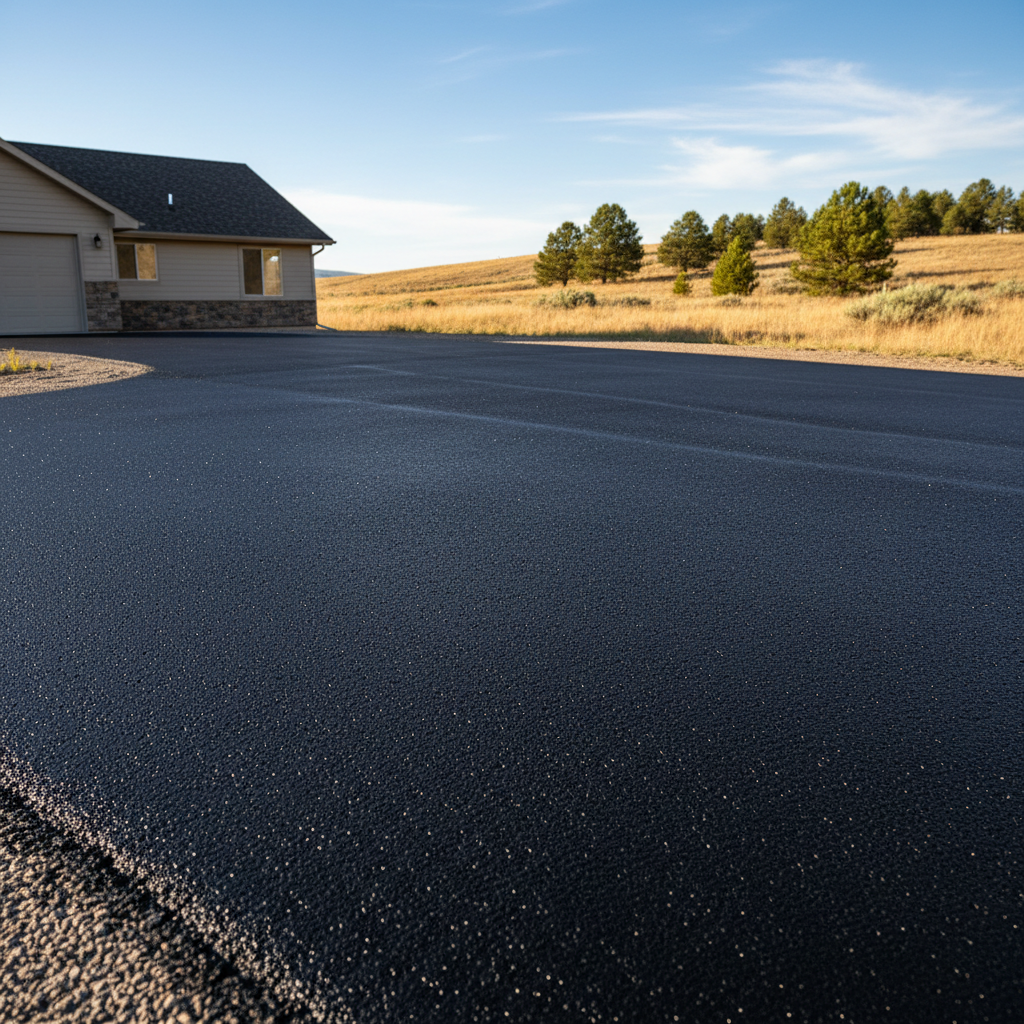
Alright, let's talk sealcoating. I get a lot of questions about this from folks all over Billings, from the Heights to the West End. It's one of those things that sounds simple, but there's a lot of bad info floating around. So, I figured I'd tackle the most common questions head-on. No marketing fluff, just what you really need to know to protect your investment.
What exactly is sealcoating, and why do I even need it?
Think of sealcoating like sunscreen and a protective topcoat for your asphalt driveway. Your driveway is made of asphalt cement and aggregates – basically, rocks held together by a tar-like binder. Over time, the sun's UV rays, oxidation, and even just water breaking through, they all wear down that binder. It starts to get brittle, fade, and tiny cracks pop up. Sealcoat is a liquid you put on top, usually made from coal tar or asphalt emulsion. It puts those lost oils back, creates a barrier against water, UV, and chemicals like oil or gas, and gives it a nice, fresh black look. It really slows down how fast your driveway ages, stopping those small cracks from turning into big, expensive potholes.
How often should I sealcoat my driveway?
This is probably the most asked question, and the answer isn't a simple 'every two years.' It really depends on a few things: how old your asphalt is, its current condition, how much sun it bakes in, and how much traffic it sees. For a brand new driveway, you actually want to wait about 6-12 months for the asphalt to fully cure before that first sealcoat. After that, generally, every 2-4 years is a good estimate. If your driveway is older, gets a lot of direct sun, or you drive heavy vehicles on it daily, you might lean towards getting it done more often. If it's mostly shaded and sees light use, you can probably stretch it closer to four years. We'll always assess it when we come out, of course.
What's the best time of year to get sealcoating done in Billings?
Timing is everything here in Montana. You need consistent warm weather for sealcoat to cure right. That means daytime temperatures consistently above 50°F (and ideally, nighttime temps staying above 40°F) for at least 24-48 hours after we put it down. So, here in Billings, we're usually looking at late spring, summer, and early fall – roughly May through September, sometimes even into October if we get a nice Indian Summer. Trying to do it too early or too late when it's cold or there's a chance of frost just won't give you a good, lasting result. It's a waste of your money and our time, frankly.
How long does it take to dry, and when can I drive on it again?
Once we've applied the sealcoat, it needs time to cure. Generally, you're looking at 24-48 hours before you can drive on it. Foot traffic can usually happen a bit sooner, maybe 12-24 hours, but it's always best to stay off it completely for as long as you can. Humidity, temperature, and direct sunlight all play a role in drying times. If it's a hot, sunny, dry day, it'll cure faster. If it's cooler and humid, it'll take longer. We'll give you a specific timeframe for your project, but patience is key. Driving on it too soon can leave tire marks, scuff the surface, and mess up the protection.
Will sealcoating fix all the cracks in my driveway?
No, and this is a big one. Sealcoating is a preventative measure, not a repair solution for significant damage. It'll fill in tiny hairline cracks and make them disappear visually, which is great. But if you have cracks wider than a quarter-inch, or any significant potholes, those need to be repaired *before* sealcoating. We use hot rubberized crack filler for those larger cracks. If you just sealcoat over big cracks, they'll still be there, and they'll likely open up again quickly, letting water in and defeating the whole purpose. Think of it like painting over a hole in your wall – it doesn't fix the hole, it just covers it up for a minute.
What's the difference between coal tar and asphalt emulsion sealers?
Good question. These are the two main types you'll encounter. Coal tar sealers are known for their superior durability, resistance to chemicals (like oil and gas spills), and a very deep black finish. They tend to last longer. Asphalt emulsion sealers are more environmentally friendly, have less odor, and are often preferred in areas with stricter environmental rules. They're still effective but might not offer quite the same level of chemical resistance or longevity as coal tar. Here at Diamond Asphalt, we often lean towards what gives the best long-term protection for our Billings weather, but we can discuss options and what makes sense for your specific driveway.
Is sealcoating a DIY job, or should I hire a professional?
Look, you can buy sealcoat at the hardware store, and some folks try to do it themselves. And for a very small, perfectly flat, easy-to-access area, maybe. But for a whole driveway, especially one with slopes, curves, or existing damage, it's a lot more work than people realize to get it right. You need proper cleaning, crack filling, the right application technique (not too thick, not too thin, even coverage), and the right equipment. If it's not prepped right, or applied wrong, it can peel, wear unevenly, or just not protect your driveway like it should. You'll end up spending more in the long run to fix a botched job. For a professional, even, and long-lasting finish, it's almost always worth calling in the pros. We've got the tools, the experience, and the right materials to get it done efficiently and effectively.
Hopefully, that clears up some of your sealcoating questions. If you're wondering if your Billings driveway is ready for a fresh coat, give us a shout at Diamond Asphalt. We'll come take a look and give you an honest assessment.